
CABLE INSULATION GUIDE
XLPE vs PVC Cable: Insulation Differences, Uses & Selection Guide
Understand the practical differences between two widely used cable insulation materials and what matters when selecting a cable.
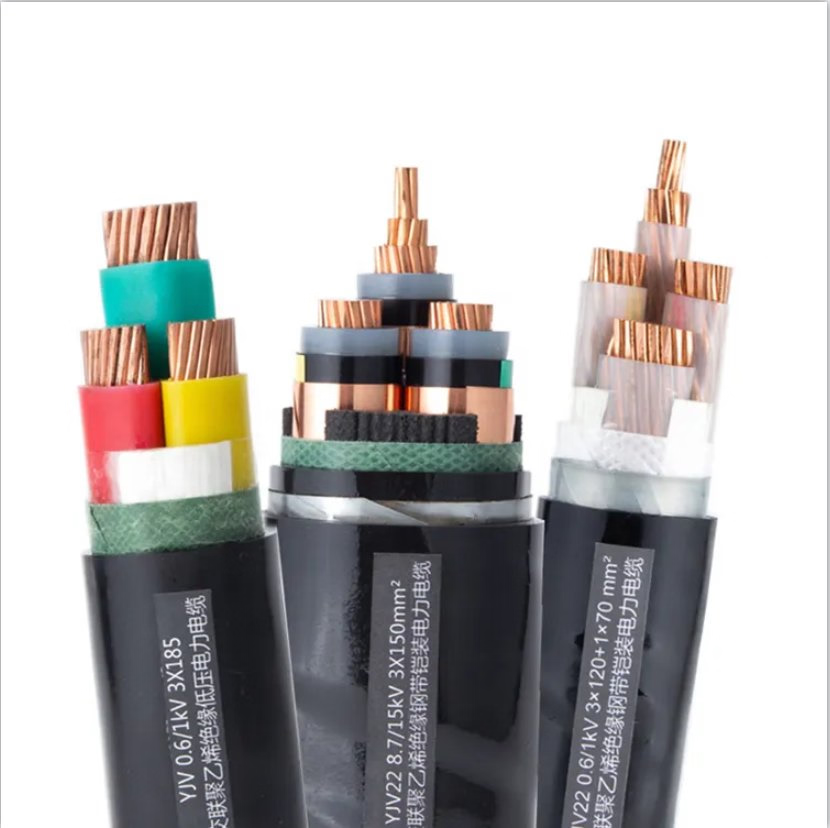
XLPE and PVC are two of the most common insulation materials used in electrical cables. They may look similar from the outside, but their thermal, electrical and mechanical characteristics differ. Understanding those differences helps engineers, electricians, students and buyers choose a cable construction suited to the installation rather than selecting by name alone.
XLPE vs PVC at a glance
| Factor | XLPE | PVC |
|---|---|---|
| Material | Cross-linked polyethylene | Polyvinyl chloride |
| Thermal performance | Generally suited to higher conductor operating temperatures in appropriately rated designs | Common in general-purpose designs; rating depends on compound and standard |
| Typical applications | Power distribution, industrial and LV/MV cable constructions | Building wires, control wiring and many general LV constructions |
What is PVC cable insulation?
PVC stands for polyvinyl chloride. It is widely used as cable insulation and sheathing because it can provide useful electrical insulation, mechanical protection and flexibility across many general electrical applications. The exact performance depends on the PVC compound and the cable standard it is designed to meet.
What is XLPE cable insulation?
XLPE stands for cross-linked polyethylene. Cross-linking changes the polyethylene structure and improves its resistance to heat and deformation. XLPE insulation is widely used in power cables where higher thermal performance and strong electrical characteristics are important.
Why operating temperature matters
Current flowing through a conductor produces heat. The insulation system must tolerate the temperatures expected under the cable’s rated operating and fault conditions. This is one reason insulation type is considered together with conductor size, current-carrying capacity, installation conditions and protection devices.
Where are XLPE and PVC cables used?
XLPE applications
Common in low-voltage and medium-voltage power distribution, industrial installations, utility networks and armoured power-cable constructions.
PVC applications
Widely encountered in building wiring, control circuits and many general low-voltage applications. Always compare the actual cable specification.
XLPE, PVC and fire performance
Insulation material alone does not tell you the complete fire performance of a cable. Flame-retardant, low-smoke and halogen-related requirements depend on the complete cable design and the standards against which it has been tested. Where those properties are required, specify them explicitly rather than relying only on the words PVC or XLPE. See our LSZH and fire-resistant cable category for related product information.
What should you check before choosing?
System voltage, conductor size and required current capacity.
Ambient temperature and indoor, outdoor, buried or exposed installation.
Mechanical protection, armouring and fire-performance requirements.
Applicable local/project standard and manufacturer technical data.
Continue learning
4 Core Cable Sizes & Pricing in Pakistan →
3/29 Cable Price & Size Guide →
Frequently asked questions
Is XLPE the same as PVC?
No. They are different polymer materials with different characteristics and are used in different cable constructions.
Can I replace a PVC cable with an XLPE cable of the same size?
Do not make a substitution based on conductor size alone. Confirm voltage rating, current capacity, installation method, termination compatibility, protection, applicable standards and the complete cable specification.
Is XLPE used in medium-voltage cables?
Yes, XLPE insulation is widely used in modern medium-voltage power-cable constructions.
FOR PROJECT BUYERS IN PAKISTAN
Need XLPE or PVC Cable Pricing?
Libra Cables is an independent cable stockist and supplier in Pakistan. Send the cable type, size, cores, voltage grade, quantity and delivery city for current stock and project pricing.