
ELECTRICAL CABLE GUIDE
Copper vs Aluminium Cable: Differences, Advantages & Selection Guide
Compare conductivity, weight, conductor sizing, terminations and practical selection factors before choosing a conductor material.
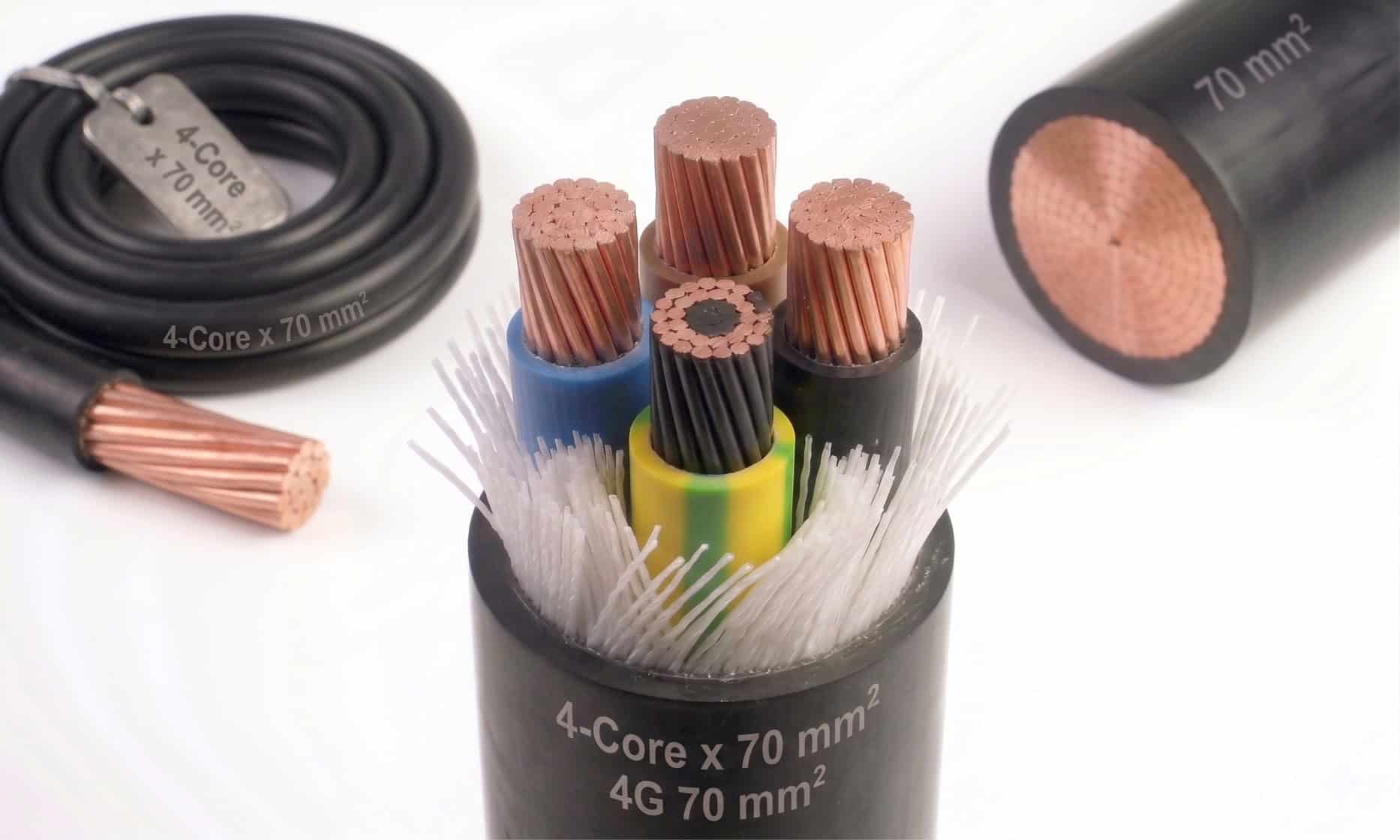
Copper and aluminium are the two conductor materials most commonly encountered in power-cable systems. Both can be used effectively when the cable, accessories and installation are properly designed, but they differ in conductivity, weight, conductor size, connection requirements and practical handling. The right choice depends on the complete electrical and mechanical design rather than on material name alone.
Copper vs aluminium cable at a glance
| Factor | Copper conductor | Aluminium conductor |
|---|---|---|
| Electrical conductivity | Higher conductivity for a given cross-sectional area | Lower conductivity than copper, so equivalent designs may require a larger conductor area |
| Weight | Heavier | Significantly lighter for a given volume |
| Physical size | Can achieve a given resistance with a smaller cross-section | Typically requires a larger cross-section for comparable resistance |
| Connections | Requires correctly rated lugs and termination practices | Requires accessories and termination practices specifically suitable for aluminium |
| Typical use | Building wiring, industrial systems, control and power cables | Power distribution, larger feeders, overhead conductors and applications where lower weight is useful |
Why copper conducts electricity better
Copper has lower electrical resistivity than aluminium. In practical cable design, this means a copper conductor can provide a required resistance using a smaller cross-sectional area than an aluminium conductor. That does not mean aluminium is unsuitable; it means the conductor must be sized for the material being used.
Conductor resistance also affects losses and voltage drop. Read our guide to copper conductor resistance for the relationship between resistance, efficiency and cable selection.
Why aluminium is widely used
Aluminium is much lighter than copper and can be attractive in large conductors, distribution systems and overhead applications. Lower conductor weight can make handling and supporting long runs easier in appropriate designs. Material cost can also influence project decisions, but purchase price should be considered together with conductor size, accessories, installation labour, losses and lifecycle requirements.
Can you replace copper with aluminium of the same size?
No. A copper and aluminium conductor with the same nominal cross-sectional area do not have the same electrical resistance. A substitution therefore requires an engineering check of current-carrying capacity, voltage drop, short-circuit performance, physical dimensions, terminations and the applicable standard.
Terminations matter
Connections are a critical part of any power circuit. Cable lugs, terminals and jointing systems must be suitable for the conductor material and installed according to their specified procedure. Aluminium conductors in particular require compatible connection systems and appropriate installation practices. Mixing conductor materials or using unsuitable accessories can create reliability and heating problems at connections.
Related cable guides
4 Core Cable Sizes & Pricing in Pakistan →
3/29 Cable Price & Size Guide →
7/29 Cable Price & Size Guide →
Copper vs aluminium and cable size
Do not compare conductor materials only by the number printed on a cable. Cable size, conductor material and electrical resistance must be considered together. If you also work with North American wire specifications, see our AWG vs mm² conversion guide for common conductor-area equivalents and sizing cautions.
Insulation is a separate decision
Conductor material is only one part of cable construction. The insulation system must also suit voltage, temperature, environment and installation requirements. Our XLPE vs PVC cable guide compares two common insulation materials used in electrical cable systems.
What should you check before choosing?
Design current, voltage drop and short-circuit requirements.
Conductor area, insulation, voltage rating and number of cores.
Ambient conditions, installation method, bending and supports.
Compatible lugs, glands, terminals and jointing hardware.
Which conductor is better?
There is no universal answer. Copper can be advantageous where compact conductor size, conductivity and established termination practices are important. Aluminium can be advantageous where conductor weight and economics for larger cross-sections are significant. The correct choice is the one that satisfies the project specification and electrical design safely.
Frequently asked questions
Is aluminium cable unsafe?
Aluminium conductors can be used safely when the cable system is properly designed, correctly sized, terminated with compatible equipment and installed to the applicable standards.
Does aluminium cable need to be larger than copper?
For a comparable resistance requirement, aluminium generally needs a larger conductor cross-sectional area because its electrical resistivity is higher than copper’s. Final sizing must be calculated for the actual circuit and installation.
Can copper and aluminium conductors be joined directly?
Connections between dissimilar conductor materials require connection systems specifically designed and rated for that purpose. Follow the accessory manufacturer’s instructions and the applicable electrical standard.
FOR PROJECT BUYERS IN PAKISTAN
Need Current Cable Stock & Pricing?
Libra Cables operates as an independent cable stockist and supplier in Pakistan. Send the conductor material, cable type, size, cores, voltage grade, quantity and delivery city.